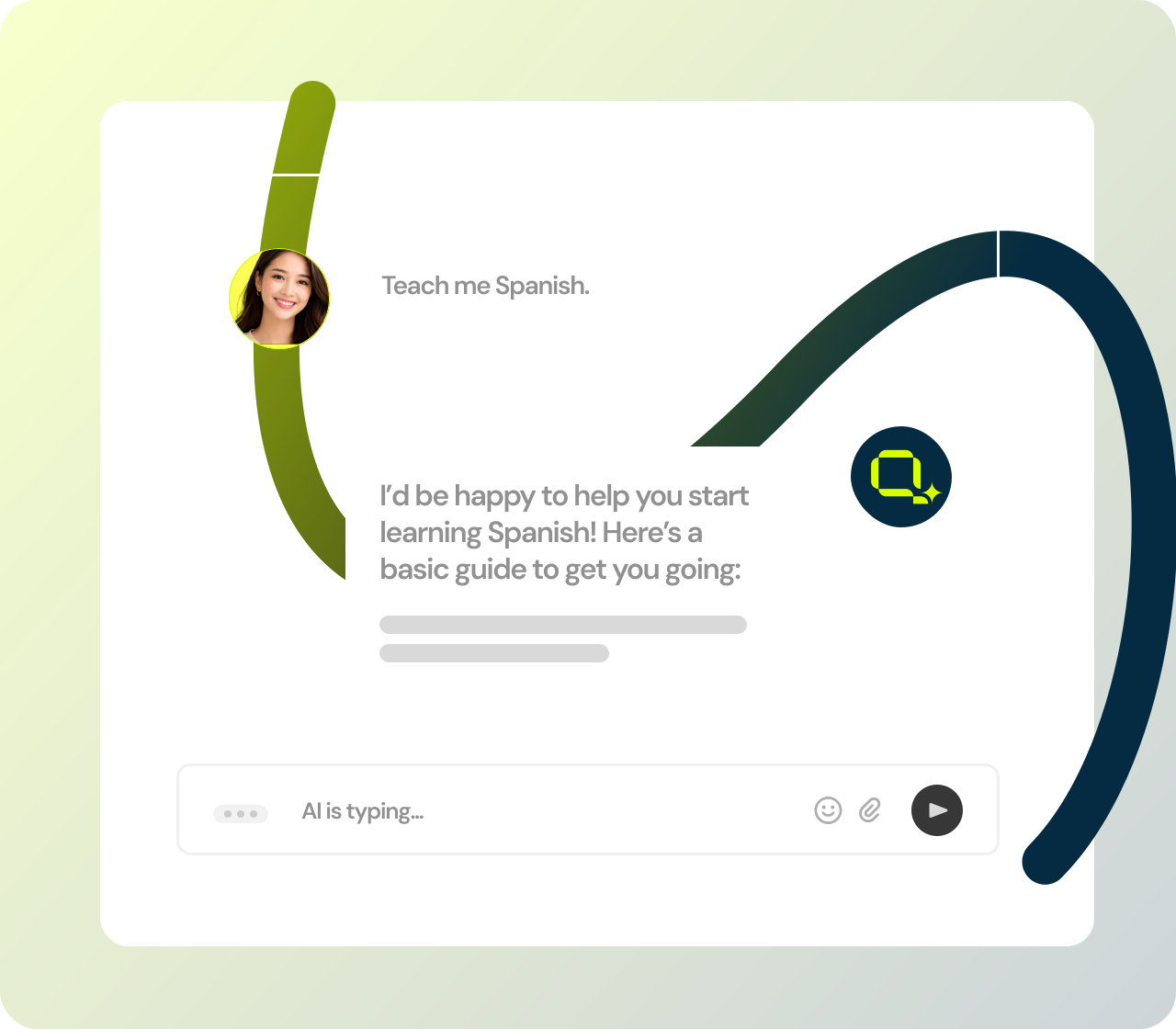
You type a sentence or two about what you need. A few seconds later there’s a draft on the screen — a blog intro, a product description, ten headline ideas. That’s an AI content generator in a nutshell.
It sounds simple, and honestly, it mostly is. But there’s a big gap between a draft you’d publish and one you’d quietly delete, and most of that gap comes down to how you use the tool.
So how does it work?
Under the hood, these tools run on large language models. The model has learned how language fits together from a huge amount of text, so when you ask for something, it predicts the words that are most likely to fit your request.
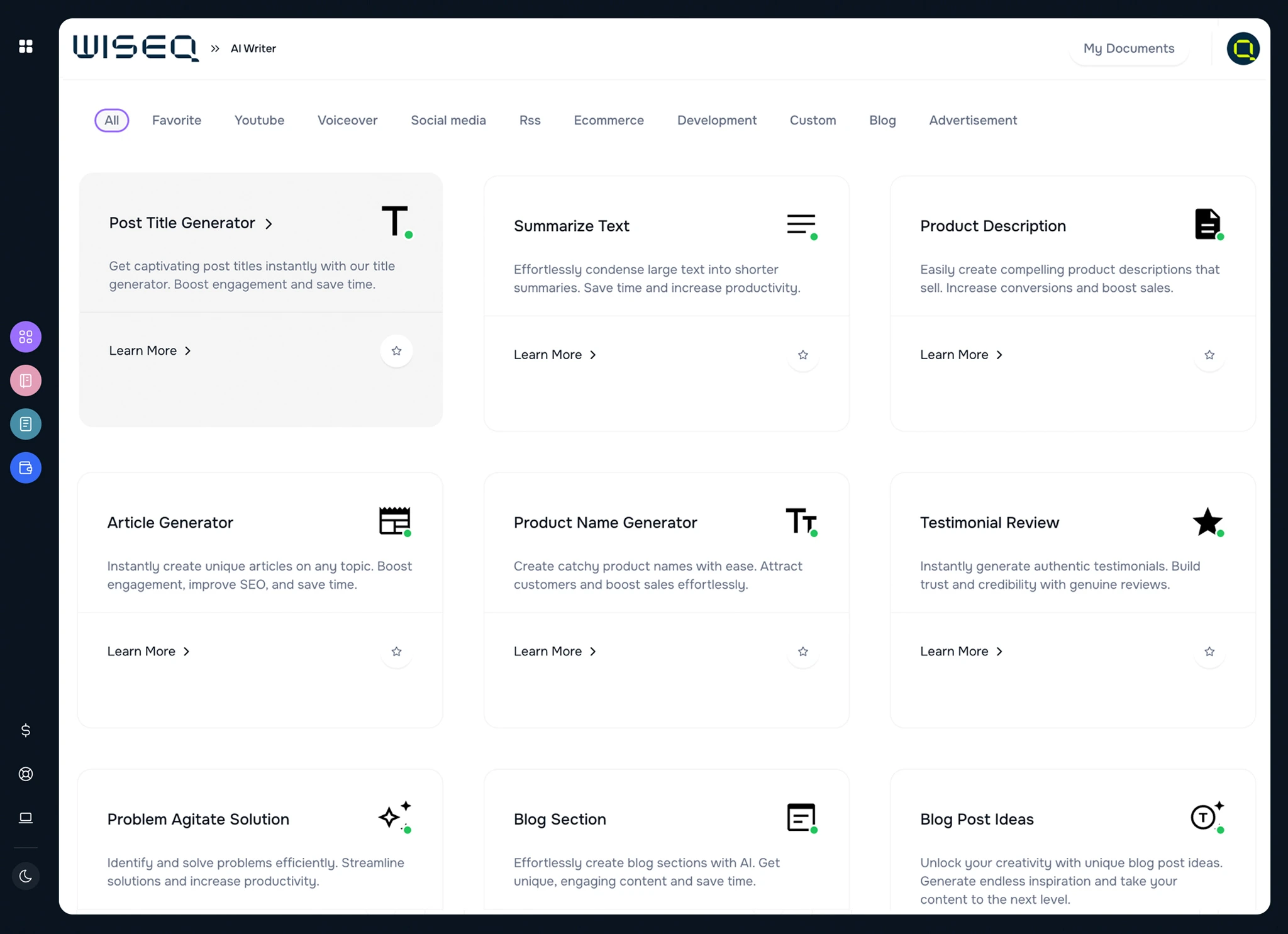
What makes a tool like WISEQ AI different from a blank chat box is templates. A template already knows what a good product description or blog section looks like. You fill in the parts only you know — the product, the audience, the tone — and the template takes care of the structure.
What people actually use it for
In our experience, teams start with the stuff they write over and over:
- Blog content: ideas, outlines, titles, intros and whole sections
- Online stores: product names and descriptions (this one saves a lot of time if you have a big catalog)
- Marketing: ad copy, social posts, testimonials, landing page text
- Day-to-day: summaries of long text, rewrites, shorter versions of something you already wrote
WISEQ AI has 48+ templates for this kind of work and writes in over 30 languages.
Where you still need a person
Here’s the honest part. AI is fast, but it doesn’t know your business. It hasn’t talked to your customers, and it will happily state a wrong number with total confidence.
So treat it like a quick first-draft partner, not an author:
- Check the facts. Names, prices, dates, claims — read them twice.
- Add what only you know. A real example, an opinion, a story from last month. That’s what makes people keep reading.
- Make it sound like you. Change the phrases that feel generic. If a sentence could be on anyone’s website, rewrite it.
A few habits that make a big difference
- Be specific. “A 150-word description of a waterproof hiking backpack for weekend hikers” beats “describe a backpack” every time.
- Say who it’s for. Audience and goal change the whole draft.
- Pick the right template. It gives the AI a better shape to follow.
- Don’t settle for the first try. Regenerate, or ask for it shorter, friendlier or more detailed.
- Always read it before it goes out. Always.
Want to try it?
The easiest test is something you actually need this week — a post, a product page, a round of social updates.
With the WISEQ AI content generator you pick a template, describe your idea and edit the result in the same place. You can start for free and only upgrade when you need more words, images or seats for your team.